By
A metal roof in the Hill Country lives through a range of temperatures that would wear out most building materials. On a clear July afternoon the panel surface can get far hotter than the air, and on a winter night it can fall below freezing. A long sheet of steel or aluminum grows and shrinks every time that happens. How well a roof deals with that constant movement decides whether it lasts for decades or starts leaking at the seams within a few years.
Standing seam roofing has earned its reputation in hot climates because it was designed with that movement in mind. Its raised seams, hidden fasteners and long continuous panels all work toward one goal: letting the metal move without opening a path for water. Getting that result depends on details most homeowners never see from the street.
Homeowners comparing quotes for Marble Falls standing seam metal roofing often find the bids look nearly the same on paper but differ in the parts that handle heat. Panel thickness, clip type, seam style, coating and underlayment all change how the roof behaves after its first hundred summer days. Knowing what each one does makes those quotes much easier to compare.
How Much Does a Metal Panel Actually Move?
Steel expands by roughly 0.0000065 inches per inch of length for every degree Fahrenheit. That sounds trivial until you do the math on a real roof. A 30-foot panel going from a 20 degree winter night to a 170 degree summer afternoon changes length by about a third of an inch. Aluminum moves about twice as much.
This doesn’t happen once a year. Clouds passing over, an evening thunderstorm cooling a hot roof in minutes, and the daily swing from morning to afternoon all push the metal back and forth. Over the life of a roof, the panels go through hundreds of thousands of these cycles. Each one stresses anything that tries to hold the metal perfectly still.
Why Exposed Screws Struggle in the Heat
Many barns and budget roofs use through-fastened panels, where screws go straight through the metal into the framing. Each screw has a rubber washer that seals the hole. As the panel moves, it works against those screws over and over. The holes slowly elongate, the washers dry out and crack under UV exposure, and the fasteners back out.
That’s why exposed-fastener roofs usually need their screws inspected and replaced every so often. In a climate with strong sun and big temperature swings, the washers often age faster than the panels themselves.
The Clip Is the Hidden Hero
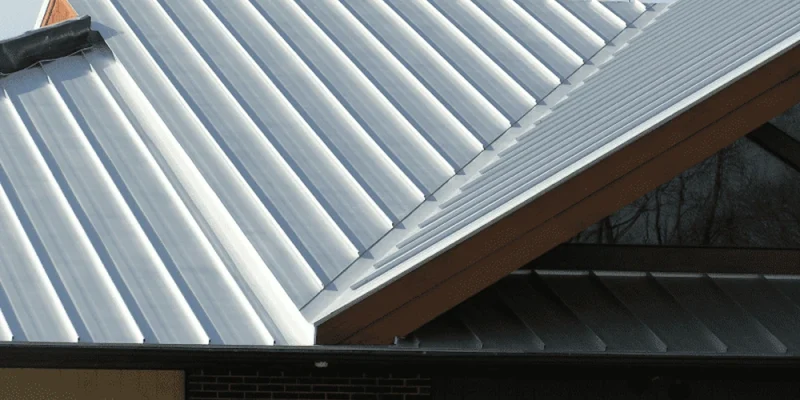
Standing seam panels are held down by clips hidden inside the seams. No fastener goes through the face of the panel. The clip is screwed to the deck, and the panel edges lock over it. This is the feature that lets a standing seam roof cope with heat.
There are two general clip styles, and the difference matters more as panels get longer:
Fixed clips hold the panel firmly in place. On shorter residential runs they can work well, because the panel can flex slightly and the total movement is small.
Floating or sliding clips have a base that stays on the deck and a top tab that slides as the panel grows and shrinks. On long runs, such as a broad ranch roof with a continuous slope, they let the metal move freely instead of fighting the fastener.
Most residential panels are pinned in one area, often near the ridge or the eave, so all the movement goes in one direction. Trim pieces at the ridge, eave and walls also need room to slide. When trim is nailed tight, the panels pull against it, and that’s often where the first leaks and squeaks begin.
Snap Lock or Mechanically Seamed?
The seam itself comes in two main types. Snap-lock panels have edges that press together by hand, which makes installation quicker and repairs simpler. Mechanically seamed panels are crimped together with a motorized seamer that folds the metal into a tighter, stronger joint.
On low-slope roofs or houses exposed to strong winds, the mechanically seamed version holds up better because water and wind have a harder time working into the joint. On steeper residential roofs, quality snap-lock panels usually perform very well. The roof’s slope and wind exposure should decide the choice more than price alone.
Coatings That Fight the Sun
The paint on a metal roof does more than add color. High-quality finishes, usually PVDF (often sold as Kynar) or SMP (silicone-modified polyester), resist fading and chalking under strong UV. PVDF generally holds its color longer, which matters on a roof that faces full afternoon sun for most of the year.
The finish also affects how hot the panel gets. Reflective coatings bounce much of the sunlight away, which lowers the surface temperature and reduces both attic heat and expansion. The Cool Roof Rating Council explains that color alone doesn’t decide how reflective a roof is, and its rated product directory lets homeowners compare actual solar reflectance numbers instead of guessing from a paint chip. Many mid-tone and even darker colors now come in cool pigment versions that perform far better than older paints.
What Sits Underneath
Under the panels, the underlayment has to survive the same heat. Traditional felt can dry out and turn brittle beneath hot metal. Most metal installations now use high-temperature synthetic underlayment rated to tolerate the heat that builds up under a panel in direct sun.
Some homeowners also add a vented air gap or furring strips between the deck and the metal. That space lets hot air escape before it reaches the attic and gives any condensation a chance to dry. Paired with balanced attic ventilation at the soffits and ridge, it can noticeably cut how hard the air conditioner works in late summer.
Gauge and Long-Term Strength
Panel thickness is measured in gauge, and a lower number means thicker metal. Residential standing seam roofing usually falls between 24 and 26 gauge steel. Thicker 24 gauge panels resist denting from hail and falling branches better and show less oil canning, the slight waviness that can appear across flat sections of the panel. Thermal stress tends to make oil canning more visible, so thicker metal and panels with small stiffening ribs help the roof look smooth for longer.
Reading a Roof After Its First Summer
A well-built standing seam roof makes its quality known in its first full year. Occasional ticking or popping as the sun hits the panels in the morning is normal and usually fades as the system settles. Seams that stay straight, trim that hasn’t buckled, and an attic that stays dry through summer storms all point to a roof that was installed with movement in mind. Wavy panels, separated trim or fresh stains near the ridge are worth having checked before the next round of heat makes them worse.